The call usually comes in around 9:30 at night. Somebody in Springville or Salem is standing in a dark hallway with a broom, listening to something skitter across the ceiling, and they want to know if it’s mice.
If the noise starts right around sunset and stops a few minutes later, it’s probably not mice. Mice are busy all night. Bats leave in one rush at dusk, come back before dawn, and are quiet in between. That pattern is the single best clue we have before anybody gets in the attic.
What’s actually up there
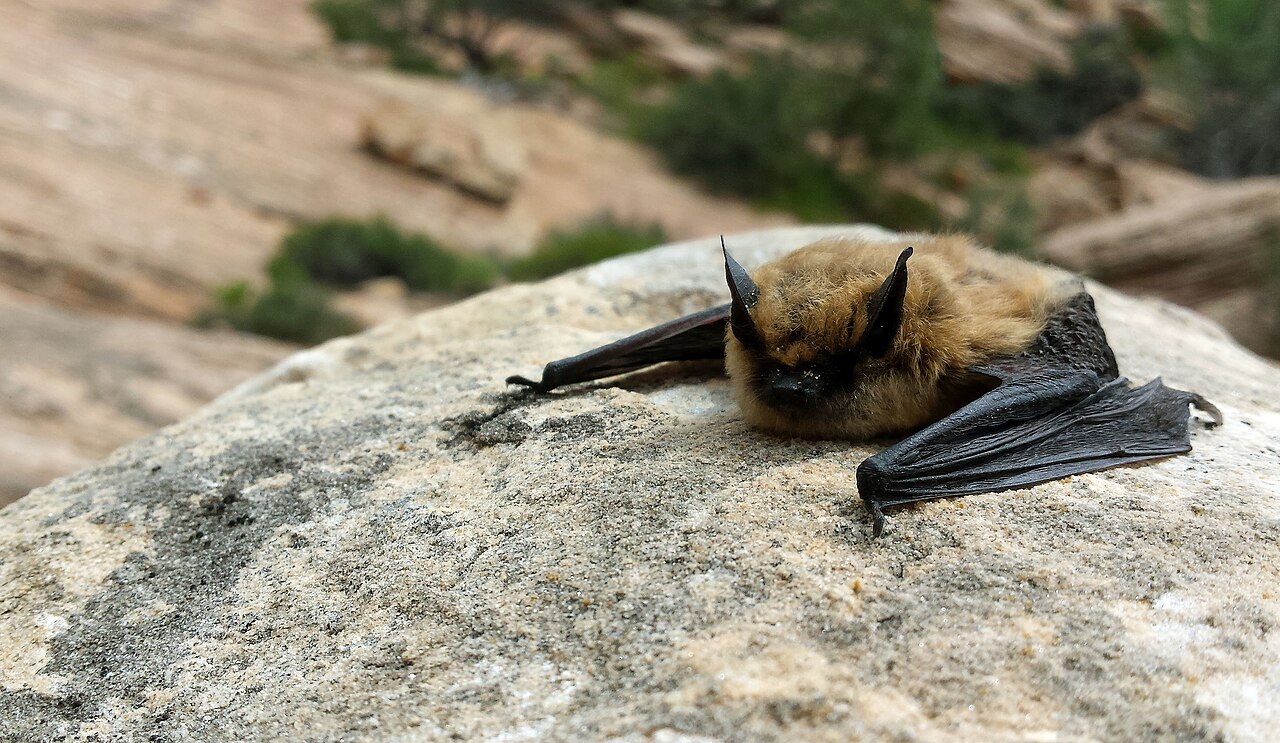
The two species we run into most in Utah County attics are little brown bats and big brown bats. Both are insect eaters. A single bat can put away hundreds of mosquitoes and moths in a night, which is a real reason to keep them around your property, just not inside your soffit.
They get in through gaps you’d never think twice about. A bat can squeeze through an opening about three-eighths of an inch, roughly the width of a pencil. The usual doors into a house are the gap where the roof meets the fascia, a lifted ridge cap, a warped soffit vent, the seam where a dormer ties into the roof, and unscreened gable vents. Older homes in Provo and Payson with wood soffits are prime candidates. So are newer builds where the roofline has a lot of angles and the trades sealed things in a hurry.
Once a colony picks a spot, they come back to it year after year. That’s why a house with bats tends to keep having bats until somebody actually closes the building up.
Why we can’t seal your attic in July
Here’s the part that surprises people, and it’s the reason this post is going up in the middle of the summer.
From roughly June through mid-August, female bats in Utah are raising pups. They gather in maternity colonies, usually in the warmest part of a structure, and the pups can’t fly for the first several weeks of life. If we put one-way exit devices on your house right now, the adults would leave at dusk, get shut out, and the pups would be stuck inside to die in your ceiling. That’s a cruel outcome, it’s a smell you will not forget, and it leaves you with dead animals in an inaccessible cavity.
It also isn’t legal to handle it that way. Bats in Utah are protected nongame species. You can’t poison them, and there’s no legitimate product that “repels” a colony out of an attic.
So the honest answer in mid-July is usually: we inspect now, we document every entry point now, and we do the exclusion in late August or September once the pups are flying. Fall is the sweet spot here anyway. The colony is still active enough that we can confirm where they’re exiting, and the pups are old enough to leave on their own.
If the colony turns out to be males or non-breeding adults, or if the situation is bad enough (bats getting into living space, someone in the home immunocompromised), that timeline can change. That’s an on-site call, not a blog-post call.
The guano problem
The health side of this is less dramatic than the internet makes it, but it isn’t nothing.
- Don’t disturb it dry. Sweeping or vacuuming dried guano puts particles in the air. If you’re going into the attic at all, don’t stir it up.
- The weight and the smell are real. A colony that’s been in a soffit for a few seasons can drop a surprising amount of material onto insulation. It soaks in, it holds odor, and it draws in other insects.
- Bats found in living space matter more than bats in the attic. Rabies is rare in Utah bats, but it does turn up. If a bat is found in a room where someone was sleeping, or with a child or a pet, don’t release it. Capture it safely and get it tested, and call your doctor.
That’s why we charge for a single-bat call at all. When we come get one bat out of your living room, that bat goes in for testing. Service for a single bat starts at $395, and that testing is part of the reason.
What real exclusion looks like
Sealing an attic against bats is detail work, not a spray. On a proper job we:
- Inspect the entire exterior and attic to map every opening, including the ones that aren’t in use yet.
- Seal all of the secondary gaps first, so the colony has fewer options.
- Put one-way devices (cones or netting) over the active exits so bats can get out and can’t get back in.
- Leave those up long enough to be sure the colony has cleared, then pull them and permanently close the openings.
- Deal with the contamination: soiled insulation removal and sanitizing where it’s warranted.
Exclusion work is priced by the foot, starting at $0.65 per foot of seal-up, and a larger colony gets priced by the actual size and scope once we’ve been on the roof. We confirm everything on site before any work starts.
Skipping step 1 is why DIY attempts fail. People find the one hole they can see, foam it shut, and the colony just moves eighteen inches over to the gap on the other side of the fascia.
If you’re hearing it now
Get the inspection on the calendar now even though the seal-up waits until fall. The colonies we look at in July are the ones we close up in September, before the bats settle in for winter and before the fall rush.
You can get a quote online or call us at (801) 494-3707 and we’ll come look at your roofline. We’re based in Payson, we’ve been doing this a long time, and we’d rather tell you to wait six weeks and do it right than take your money for a job that traps pups in your ceiling. Yes, we can.