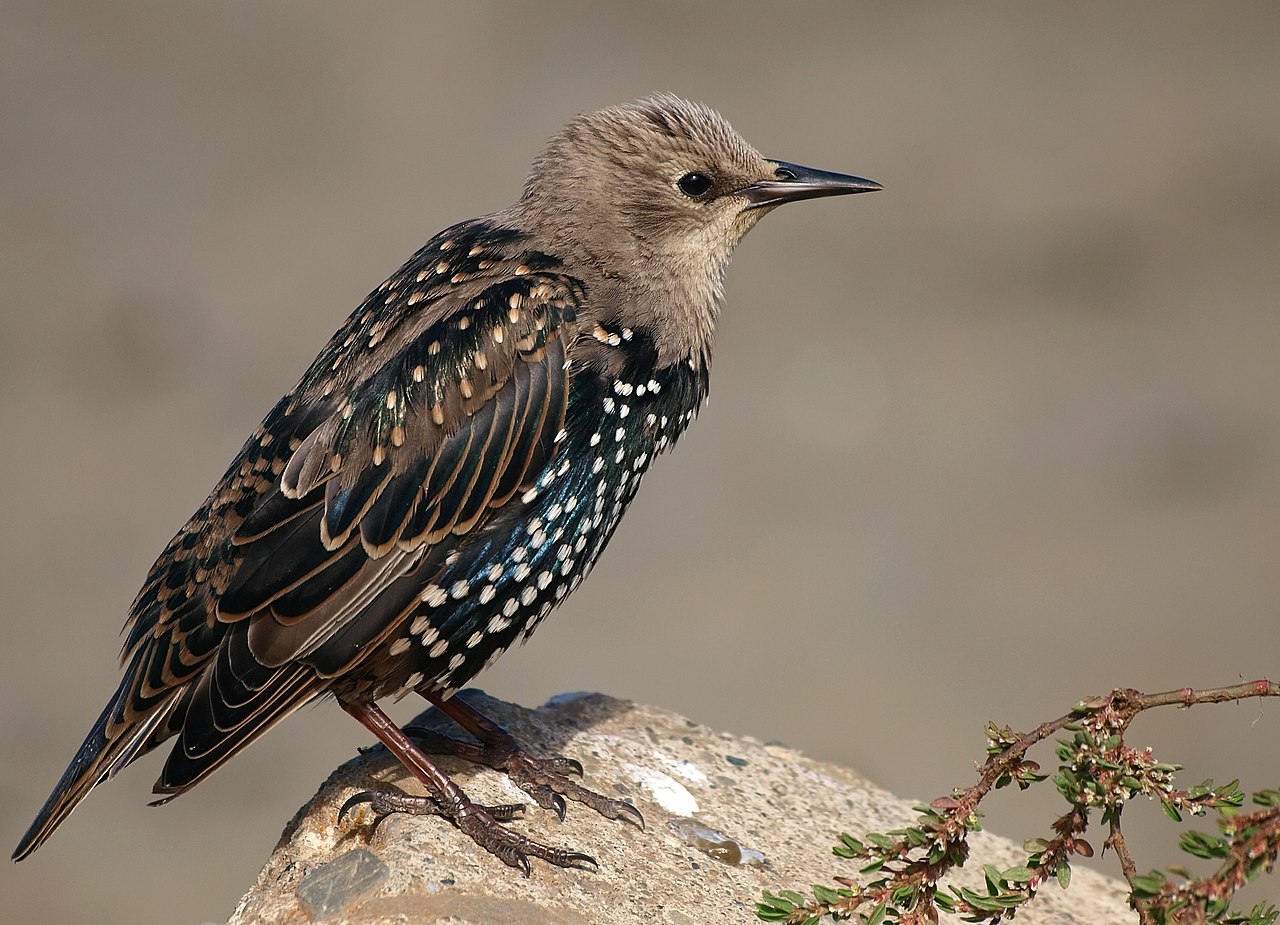
The call usually comes in the morning. Somebody’s in the shower with the fan running, and there’s scratching and a thin, raspy chirping coming out of the ceiling right above them. It sounds close because it is close. Whatever’s making that noise is eight or ten inches away on the other side of the drywall, inside the duct that’s supposed to carry the steam out of your house.
Around here, that’s almost always a European starling. We pull them out of bathroom vents, kitchen hood vents, and dryer vents all over Utah County, and by the time somebody calls us, the birds have usually been in there for weeks.
Why a vent is perfect and your house is the problem
Starlings are cavity nesters. In a natural setting they’d take an old woodpecker hole in a cottonwood. A four-inch duct running into a warm wall is better than anything a tree ever offered them: dry, insulated, defensible, and about the right diameter.
The way in is the flapper. Most bathroom and dryer vents end in a plastic hood with a hinged damper that swings shut when the fan isn’t running. Those dampers get brittle in our sun, they warp, they collect lint, and after a decade plenty of them just hang open. A starling only needs it open once. With nest material packed in behind it, the flapper can’t close at all, and the vent is a permanent open door.
They’ll also take a soffit gap or loose siding near the roofline, but the vent is the easy way in, so it’s the first thing we check.
The Utah legal part, briefly
This matters more than people expect. European starlings and house sparrows were both brought over from Europe, so they aren’t native and they aren’t protected under the Migratory Bird Treaty Act. Neither are feral pigeons. A starling nest in your vent can legally be removed and the vent sealed.
Native birds are different. It’s illegal to disturb an active nest of a native species, so if what’s in your eave is a house finch or a swallow, you wait out the brood and then exclude. Homeowners mix these up constantly, so identifying the bird is part of the first visit.
The dryer vent is the one that worries us
A bathroom fan blocked by a nest is a mold risk. The steam has nowhere to go, so you end up with staining and mildew on the ceiling around the fan grille. Annoying, fixable.
A dryer vent packed with grass and twigs is a fire problem. Your dryer is pushing hot, lint-heavy air into a duct that’s now stuffed with the driest possible tinder, and the airflow it needs to stay cool is gone. Clogged dryer exhaust is one of the most common causes of dryer fires, and a bird nest is the fastest way to clog one. The tell is usually laundry, not birds: two cycles to dry a load, a machine running hotter than it used to, a humid laundry room. People in Spanish Fork and Payson call us about the noise and mention the dryer as an afterthought.
The part nobody warns you about: the mites
Here’s what turns a bird problem into a house problem.
Bird nests carry mites. The ones we find in starling and sparrow nests are northern fowl mites and chicken mites, and they live in the nest material feeding on the chicks. When the young fledge and the adults leave, the mites lose their food source. Thousands of them go looking for a new one, and the only direction to go is along the duct, into your wall, and out through the fan housing.
They will bite you. People describe invisible itching, usually in a room against an exterior wall, small red welts, and nothing turning up on a bed inspection. The saving grace is that they can’t live or reproduce on people, so once the nest and debris come out and the area is treated, they die off. We’ve seen families spend a month treating for bed bugs that were never there, because nobody connected the itching to the birds that went quiet three weeks earlier.
Nest debris also brings carpet beetles and larder beetles, which feed on the feathers, droppings, and anything that died in there. Those stick around a lot longer than the mites do.
What not to do
Do not screw a plate over the vent while there’s a nest in it. If there are chicks inside, they die in your wall, and then you have an odor you can’t locate and a beetle bloom feeding on it. Every fall we get at least one of those, and the fix is a whole lot uglier than the original job.
Do not staple window screen or fine mesh over a dryer vent. Lint catches on it almost immediately and you’ve traded a bird problem for the same blocked-duct fire risk. Dryer terminations aren’t supposed to be screened for exactly that reason. They need a guard built for the job.
And don’t count on a fan you can hear running to keep birds out. Starlings nest behind operating dryer vents constantly. The noise doesn’t bother them.
What we do
Late August into fall is the right window. Starling nesting season is over here, the young have fledged, and the vents are empty, which means we can clear and cage them before the birds start scouting again in spring.
The job has three parts, and skipping any one means you’re doing it again next year. We pull the nest and packed debris out of the duct completely, back to the fan housing. We sanitize and treat for the mites and beetles the nest left behind. Then we install a pest cage on the termination, a metal guard sized to the vent that a bird can’t get past and that still lets the vent do its job.
Our bird-in-vent service starts at $495, depending on how high the vent sits and how many you’ve got. Additional vents run less, and if your ducts are already clean and you just want them guarded before spring, a pest cage alone is $75 per vent.
If you’re hearing scratching above the bathroom fan, or the dryer suddenly takes two cycles, get it checked before it gets cold. You can get a quote online or call us at (801) 494-3707. Twenty-three years of doing this in Utah means we’ve already met whatever is living in your wall. Can we get it out and keep it out? Yes, we can.