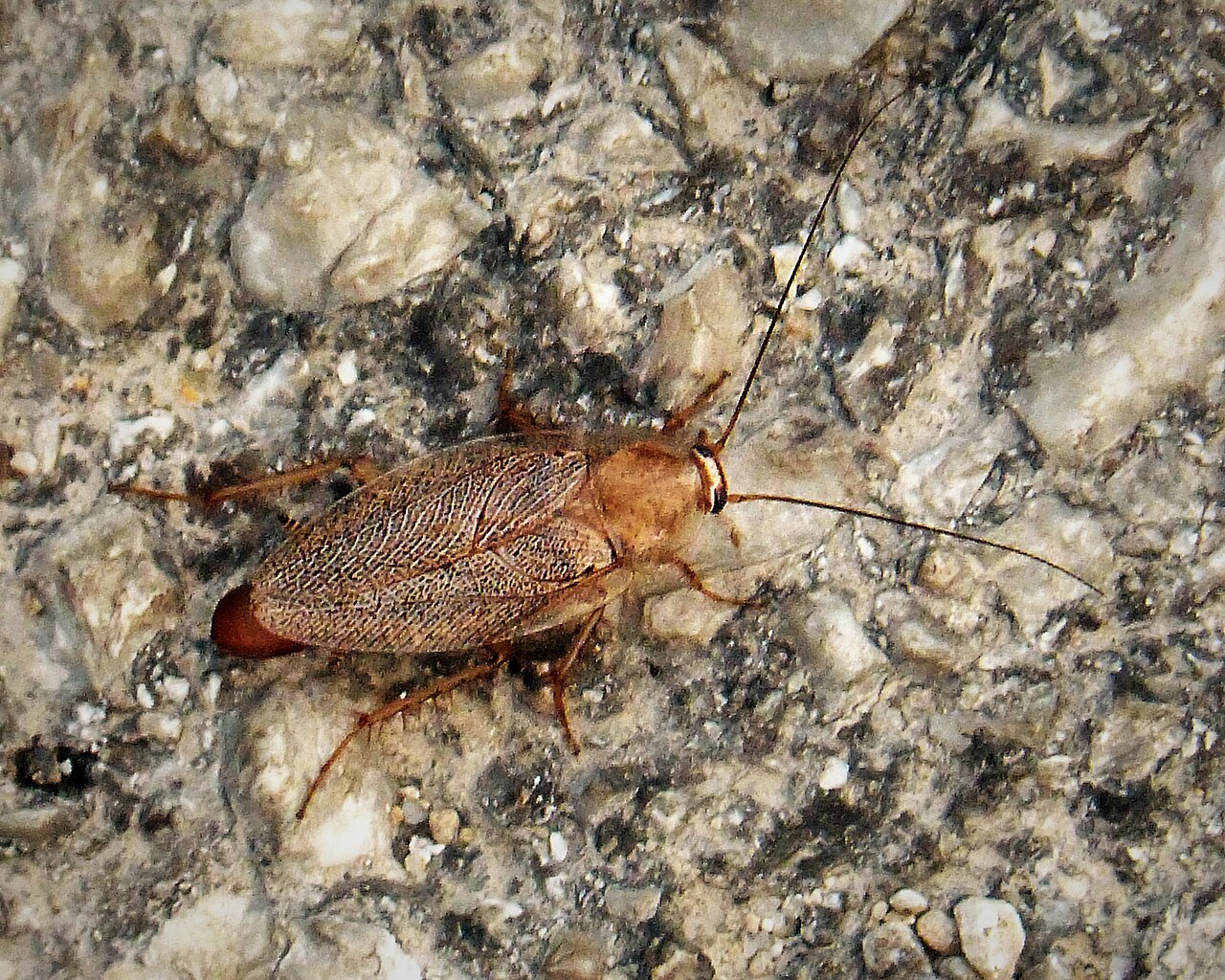
The most embarrassed callers we get are the roach calls. People will describe the problem in a near whisper, and somewhere in the first minute they always say the same thing: “but my house is clean.” We believe them. Roaches in a spotless kitchen surprise homeowners every time, but they don’t surprise us, because how clean your house is was never really the question. The question is what came through your front door, and where it had been before that.
They don’t walk in, they ride in
The roach that matters here is the German cockroach, the small tan one about half an inch long with two dark stripes behind its head. It’s the species behind almost every serious kitchen infestation in the country, and it has a trait that explains the whole “clean house” mystery: it doesn’t really live outdoors. German roaches move from building to building the same way bed bugs do, by riding along in our stuff.
The rides we see over and over in Utah County are boring, everyday ones. A cardboard box from a warehouse or a storage unit. A used fridge or dishwasher off the classifieds, with roaches or their egg cases tucked up in the motor housing where nobody looks. A secondhand couch. Grocery bags that sat in an infested stockroom. A kid’s boxes coming home from an apartment in Provo or Orem at the end of a lease. In multi-unit buildings they don’t even need the ride; they travel between units through wall voids and along plumbing lines, which is why one unit’s problem becomes the floor’s problem.
None of that has anything to do with housekeeping. A single hitchhiking female carries an egg case with around 30 to 40 eggs, and she keeps it attached to her body until the day they hatch, so she brings the whole next generation with her in one trip. That’s how a clean house in Springville goes from zero roaches to hundreds in a couple of months off one used appliance.
The Utah part of the story
People assume our cold winters keep roaches out of Utah, and for German roaches the winter is simply irrelevant. They live their entire lives inside heated buildings, where it’s 72 degrees in January, and they’ve been doing it here as long as there have been heated buildings.
The other roach we see along the Wasatch Front is the Oriental cockroach, the big, dark, slow one people call a water bug. Those do live outside, in crawl spaces, window wells, and drains, and they wander in at ground level looking for moisture, usually into basements and ground-floor bathrooms. An Oriental roach in the basement is an entry-point and moisture problem. German roaches in the kitchen are a breeding problem, and the difference matters, because the treatments are different.
What “clean” means to a roach
Here’s the uncomfortable math: a German roach can live on a few crumbs and a drop of water. The grease film on the side of a stove is a meal. So is the splash zone under a dishwasher, the water in a pet bowl overnight, the condensation on a cold water line, or the crumbs inside a toaster. A kitchen can pass any human inspection and still feed a roach population comfortably, because they’re not eating at the counter level you clean. They’re living in the warm, dark seams of the room: behind the fridge where the motor keeps things cozy, inside the dishwasher door gasket, under the sink around the drain lines, in the hinge gaps of cabinet boxes.
That’s why “clean better” is not the fix once they’re established. Sanitation keeps the numbers lower and makes treatment work faster, and it absolutely matters. It just can’t starve them out on its own.
Why the spray can makes it worse
The first thing most people do is buy a can of roach spray, and it’s honestly one of the better things you can do for our competition. Over-the-counter sprays are repellents. Hit the roaches you can see and you kill a few, but the survivors scatter away from the treated area, deeper into the wall voids and into rooms they hadn’t reached yet. Worse, the residue contaminates the area for baiting. Roaches won’t feed on bait placed near fresh spray, so the one tool that actually ends infestations stops working right where you need it.
Gel baits are how German roach problems actually get solved. The bait goes in tiny placements exactly where the roaches live, they feed on it and carry it back to the harborage, and the ones that die there poison the others, because roaches eat their dead and each other’s droppings. It’s grim, and it’s also the mechanism that reaches the egg-carrying females and the nymphs that never leave the wall. Done right, the colony collapses from the inside.
What a cleanout involves
Our roach cleanout starts at $395, and it’s a process, not a single visit. We start with an inspection to map the harborage, because bait in the wrong spot is wasted bait. Then we treat with gel baits and insect growth regulators, which stop nymphs from maturing into breeding adults, plus targeted product in the voids and seams where the population is concentrated. We’ll tell you exactly what to clean and what to leave alone so the bait keeps working. Then we come back, because egg cases that were already laid keep hatching for weeks, and the follow-up is what makes the difference between “way better” and “gone.”
If you’re seeing small tan roaches in the kitchen at night, or you just hauled home a used appliance and something moved when you tipped it, don’t burn a month on spray cans. You can get a quote online or call us at (801) 494-3707, and we’ll tell you honestly whether you’re looking at a wanderer from the window well or the start of a real problem. Either way, can we fix it? Yes, we can.