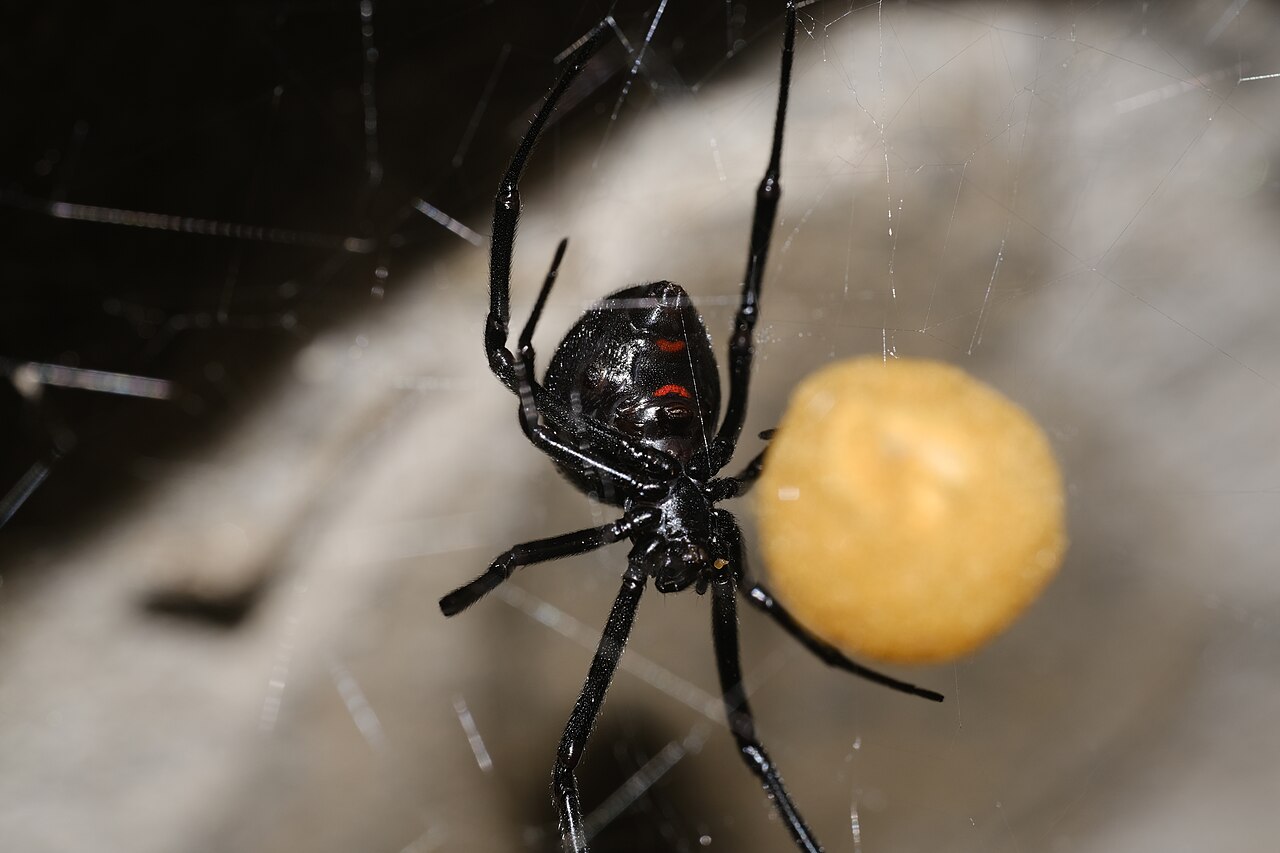
Come August, the spiders show up. We get a wave of calls every year right around now, and most of them start the same way: somebody found a big dark spider in the garage in Spanish Fork or the basement in Orem, and they want to know if it’s the dangerous one.
Fair question. Utah has a lot of spiders and only one of them is worth losing sleep over. Here’s how to tell them apart and what actually matters.
Why you’re seeing more of them right now
Nothing’s wrong with your house. Late summer into fall is just when spiders get big and start moving. The ones that hatched in spring have spent all summer eating, and by August they’re full grown and easy to spot. On top of that, adult males go wandering to find a mate this time of year, which is why the ones you notice crossing the floor at night tend to be the long, leggy ones. They’re not moving in. They’re passing through, and they followed the bugs.
That’s the part people miss. Spiders go where the food is. A house with a lot of spiders usually has a lot of the small insects spiders eat, drawn in by your porch lights and your foundation.
The black widow is the one that matters
In Utah County, the western black widow is the only spider we treat that’s a genuine medical concern. You already know the look: glossy black, round body, and a red hourglass on the underside of the female. Males and juveniles are smaller and marked differently, and they’re not the ones to worry about. It’s the mature female that bites when she’s cornered.
Widows are homebodies. They build messy, strong webs down low and out of the way, and they hardly ever leave them. The spots we pull them out of over and over:
- Window wells (the number one spot in Utah, hands down)
- Garages, especially in corners and around stored boxes
- Wood piles and under the edges of decks
- Meter boxes, water shutoffs, and crawl space vents
- Under patio furniture and the lip of a planter
A widow bite is no joke, but it’s rarely the horror story people picture. The venom is a neurotoxin, so a bad bite brings on muscle cramping, sweating, and belly pain that can get intense for a day or two. Deaths are extremely rare and almost always involve small kids or someone already medically fragile. If you get bitten and start feeling those whole-body symptoms, call Poison Control or your doctor. Don’t wait it out, but don’t panic either.
The hobo spider’s reputation is mostly wrong
Here’s where we spend a good chunk of the phone call talking people down.
For years the hobo spider got blamed for nasty flesh-rotting bites, and that reputation stuck hard here and across the Northwest. The science hasn’t held up. The CDC pulled the hobo spider off its list of medically significant spiders back in 2017, and there’s no solid evidence that a hobo bite causes the rotting wounds it got famous for. Most of those wounds turn out to be something else entirely, from ordinary infections to skin conditions that got pinned on a spider nobody actually saw bite.
Hobo spiders are real and they’re here, mostly at ground level in window wells and basements, and they’re fast, which doesn’t help their case. But a quick brown spider in your window well is far more likely to be a hobo or a common house spider than anything that’ll hurt you. And here’s a bit of good news that surprises people: the brown recluse, the one everybody’s really scared of, does not live in Utah. We don’t have an established population. On the rare occasion one turns up, it hitched a ride in a box from out of state.
How to tell what you’re dealing with
You don’t have to be an expert. A couple of quick tells:
- Where it is. A messy web down low with a shiny black spider in it means widow. A funnel-shaped web at ground level, or a spider running flat-out across the floor, is almost always harmless.
- The shine and the shape. Widows are glossy, round, and slow. Hobos and house spiders are dull brown, longer-legged, and skittery.
- The hourglass. If you can safely see a red mark under a round black body, treat it as a widow and keep kids and pets clear.
When you’re not sure, don’t handle it. Trap it under a cup, slide a card underneath, and get a good look or a photo from a safe distance.
What we actually do about spiders
Knocking down the one spider you can see doesn’t fix anything, because the next one’s already on its way to the same buffet. Real spider control goes after the whole setup. We de-web the eaves, corners, and window wells (which also clears out egg sacs before they hatch a couple hundred more), treat the harborage spots where widows hide, and knock down the insect population they’re feeding on so your house stops being a food court.
Spiders and black widows are both covered under our regular year-round plan, so for most homes this isn’t a special call. It’s part of keeping a barrier on the house through the stretch of the year when the bugs, and the spiders chasing them, are at their worst.
If you found something in the window well and you’re not sure what it is, send us a photo or get a quote online, or just call us at (801) 494-3707. We’re in Payson, we know exactly which Utah spiders to worry about and which ones to leave alone, and we’ll tell you straight. Yes, we can.