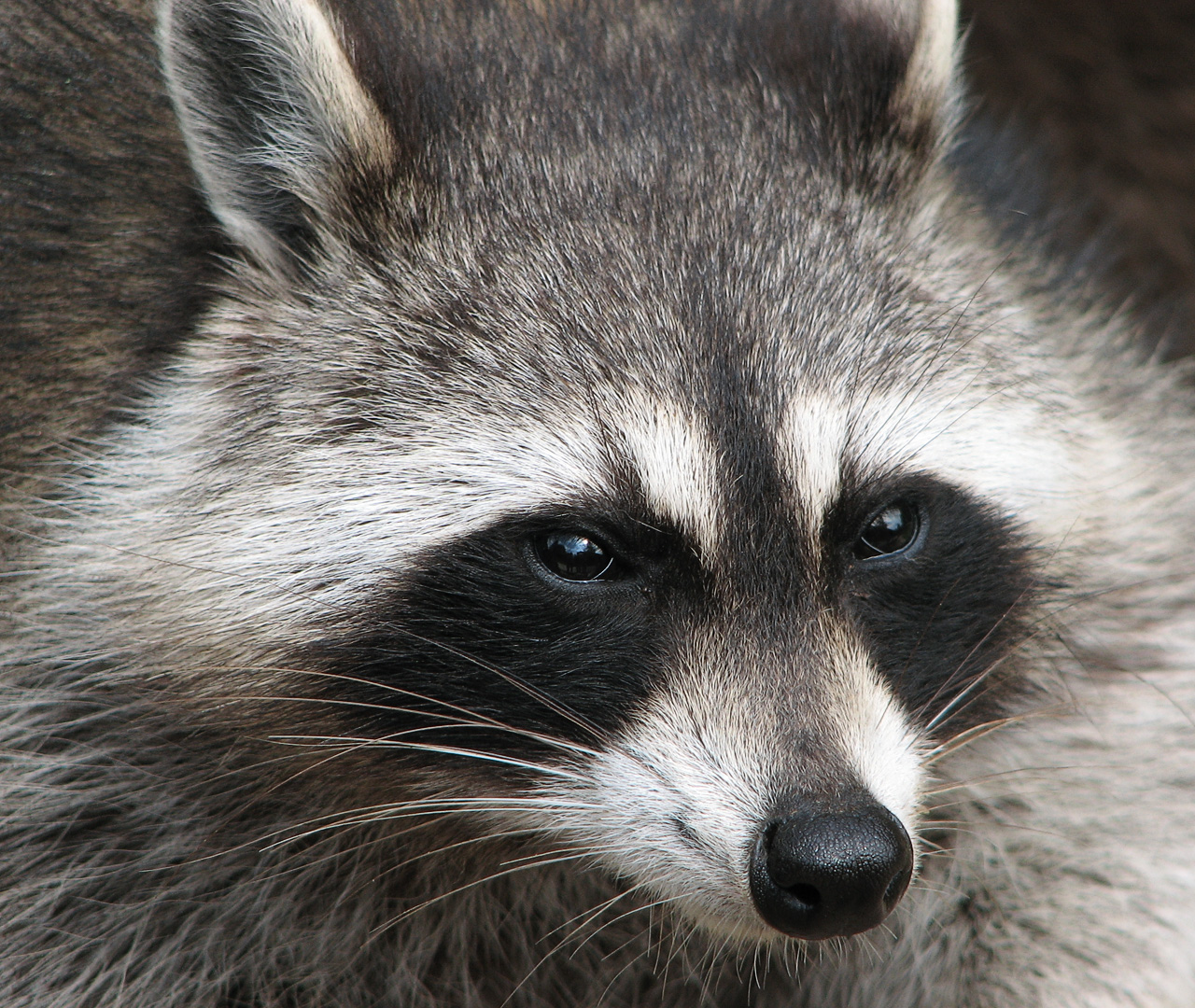
People almost never call us and say “I think I have a raccoon.” They call and say it sounds like somebody’s walking around up there. That’s the tell. Mice skitter, squirrels scratch and roll acorns, bats rustle. A raccoon thumps. Twenty pounds of animal on the other side of your bedroom ceiling sounds exactly like what it is.
By the time we get that call, the homeowner has usually already been to the feed store and bought a cage trap. We understand the instinct. It’s also the single fastest way to turn a two-day job into a three-week one, and we want to explain why before you set it.
How they got in
Raccoons don’t slip through a crack. They make the hole, or they take the one your builder left.
The spots we find over and over on Utah County homes: the gable vent with the louvers pushed in, the soffit corner where the return meets the roofline, a lifted section of fascia, plastic roof vents that pop off with almost no effort, and chimneys. A chimney without a proper cap is basically a hollow tree to a raccoon, and they’ll den right on the smoke shelf.
They’re strong and their front paws work like hands. An adult can pull back a shingle course, peel a soffit panel, or work a loose vent free in a night. Older homes in Provo and Springville with wood trim are easy targets, and so are newer builds with complicated rooflines where a lot of joints meet in one spot.
Once they’re in, the damage adds up fast. Insulation gets trampled flat and soiled, flex duct gets torn open, and urine soaks through into drywall and the ceiling below. We’ve walked attics where the R-value was essentially gone across half the space.
It’s almost never one raccoon
Most Utah litters are born in April and May. By the end of July the young are mobile, following mom out at night, and still coming back to the den to sleep. Late litters happen too, so it isn’t unusual to find kits in an attic well into summer.
This is the part that wrecks DIY trapping. You set a cage on the roof or in the yard, you catch a big raccoon, and you feel like you solved it. What you actually did was remove the mother and leave three or four young sealed in your attic with nothing to eat. They die in the wall cavity, and then you have a much worse problem: an odor that lasts weeks, flies, and eventually a drywall cut to get the bodies out.
Any honest removal starts with figuring out whether there are young up there before anybody traps anything. Sometimes the right answer is to get the whole family out at once and screen the entry behind them.
The latrine is the part we take most seriously
Raccoons pick one spot and use it as a toilet, over and over. In a house that’s usually a corner of the attic, the top of a wall plate, a flat section of roof, or a deck. It builds into a pile, and it’s not just gross.
Raccoons commonly carry a roundworm called Baylisascaris procyonis. The eggs pass in the droppings, become infective after a couple of weeks, and then survive in that material for years. They shrug off ordinary disinfectants. Bleach won’t kill them. That’s why a real latrine cleanup uses heat and steam rather than a spray bottle and a shop vac.
Human infection is rare, but when it happens it’s serious, and the people most at risk are small kids and anyone who might handle contaminated material and then touch their face. Dogs get into it too. So if you find a pile of droppings in the attic or on the deck, don’t sweep it, don’t vacuum it, and don’t power-wash it. Stirring it up is the exact thing you want to avoid.
Why the feed store trap backfires
Beyond the orphaned-kits problem, here’s what we see go wrong:
- You catch the wrong animal. Skunks are the classic one, and a skunk in a cage trap next to your house is a bad afternoon. Cats are second.
- The survivors get trap-shy. Raccoons learn fast. Miss once and that animal may not go near a cage again for weeks, which means the pro who comes after you is starting on hard mode.
- Handling a cornered raccoon is genuinely dangerous. They bite and they fight. Rabies in Utah is mostly a bat issue and the raccoon strain from the eastern states isn’t established here, but a bite still means a trip to the doctor and a real infection risk.
- Relocation isn’t a legal free-for-all. Utah manages raccoons as a furbearer, and hauling live wildlife somewhere else and turning it loose is regulated by the Division of Wildlife Resources. “I’ll just drive it up the canyon” is not the plan people think it is, and a dumped raccoon in unfamiliar territory usually doesn’t survive anyway.
- The hole is still open. This is the big one. Removing the animal without closing the opening just makes the vacancy available. Raccoons, and later squirrels or birds, follow the same scent trail back to a den site that’s already proven it works.
What removal actually looks like
A finished job has four parts, and the trapping is only one of them.
We inspect the attic and the entire roofline to find every entry point and to figure out how many animals are up there and whether young are involved. We remove the raccoons, using the method that fits the situation. We close the openings for good with materials an animal that strong can’t defeat, which usually means metal, not foam and caulk. Then we deal with the mess: soiled insulation out, latrine areas treated with heat and steam, and the space sanitized.
Raccoon trapping and removal starts at $495, and latrine cleanup starts at $1,595 depending on how much of the attic is contaminated. We confirm the real number on site, because a single animal in a Mapleton chimney and a family that’s been living over a bedroom since spring are not the same job.
If you’re hearing footsteps overhead at night, get somebody up there before it becomes a cleanup. You can get a quote online or call us at (801) 494-3707 and we’ll come look at your roofline and your attic. Yes, we can.