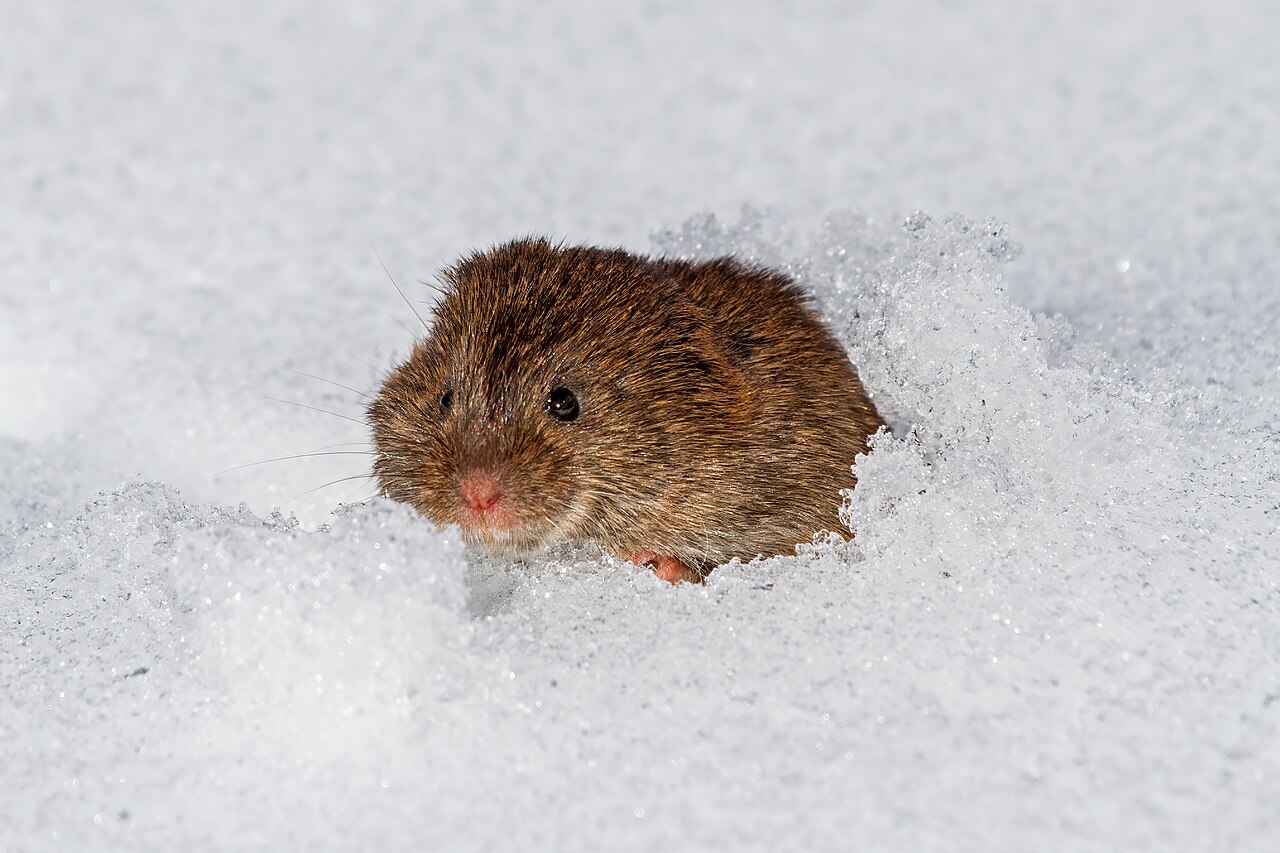
Three different animals get blamed for a torn-up lawn in Utah County, and one of them almost certainly didn’t do it. When somebody calls us about “moles” in Salem or Santaquin, what’s actually out there is nearly always a vole or a pocket gopher. They’re different animals with different habits, and they get controlled in completely different ways, so putting the right name on the damage is the whole first step.
The good news is you don’t need to see the animal. Voles and gophers each leave evidence as distinctive as a signature. Here’s how to read your lawn, and why August and September are the right months to do something about what you find.
First, the mole you probably don’t have
Moles are insect eaters. They tunnel just under the surface hunting earthworms and grubs, leaving raised ridges you can press down with your foot and little volcano-shaped mounds of fluffy soil. That’s the picture in every lawn care article, because most of those articles are written for the Midwest or the coasts.
Utah isn’t mole country. The state sits outside the range of the North American mole species, and true moles are essentially absent here. In more than two decades of pest work we’ve handled voles and gophers beyond counting, and the “mole” calls turn into one of those two just about every time. So if a bag of mole repellent is in your cart, put it back and keep reading.
Voles: the damage you won’t see until the snow melts
A vole looks like a stocky mouse with a short tail, small ears, and a blunt nose. You’ll sometimes hear them called meadow mice. They don’t dig deep. They live at the grass line, clipping stems and blades right at the base and wearing narrow paths through the lawn, each one about two inches wide, the width of the animal.
Here’s what makes them sneaky: their worst work happens under snow. Snow cover protects voles from the hawks and owls that eat them all summer, so they spend the winter running their trail network in perfect safety, eating grass crowns as they go. You find out in March, when the snow comes off and the lawn looks like somebody dragged a garden hose through it in every direction. Those winding, dead-grass runways are the classic vole reveal.
The lawn usually recovers. Your trees might not. Under the snow, voles gnaw the bark off young trees and shrubs at ground level, and if they chew all the way around the trunk, that girdling kills the tree. In orchard country from Payson down through Santaquin, that’s the vole damage that actually costs money. A young fruit tree doesn’t care about surface trails in the fescue. It cares a lot about losing its bark from the root flare to the snow line.
Voles also breed like the rodents they are, with several litters a year, and their populations run in cycles. Every few years the numbers spike, and those are the winters that produce lawns that look plowed.
Pocket gophers: the mound builders
Gophers work deeper and leave a bigger mess. The signature is a fresh mound of loose dirt shaped like a fan or a crescent, with a visible dirt plug off to one side of it. No open hole, because gophers seal their tunnels behind them. If you’re looking at bare dirt piled on top of the grass rather than trails worn through it, you’re looking at gopher work.
A pocket gopher eats roots, bulbs, and taproots from below, and it will pull an entire plant down into the tunnel from underneath. Gardeners find out when a row of carrots vanishes or a young shrub tips over with no roots left. They also chew whatever’s in their path, and in a lot of yards that means drip line and buried irrigation.
Two more things worth knowing. Gophers live alone, so one tunnel system is one animal, and a yard with mounds in three areas may only have two or three gophers total. That’s why targeted trapping works on them. And they leave their own winter sign that gets blamed on voles: at snowmelt, you may find ropes of packed soil lying on top of the lawn. Those are casts, tunnels the gopher packed with dirt while working through the snow, and they mean gopher, not vole.
Reading the evidence at a glance
- Narrow surface trails worn through the grass, clipped stems, no piles of dirt: voles.
- Fresh fan-shaped dirt mounds with a plugged hole and no trails between them: pocket gophers.
- Bark chewed off young trees near the ground after winter: voles.
- Plants wilting or disappearing from below, chewed drip line: gophers.
- Raised ridges and volcano mounds like the internet photos: not likely in Utah. Look again for a plug.
Why fall is prevention time
It’s tempting to shrug at lawn damage in August, when the grass is half dormant anyway. But fall is exactly when the next round of damage gets decided.
Vole populations peak going into winter, and snow is their shield. Everything you do before the first real snowfall counts double. Make the last mow of the year a short one, clear the tall grass along fence lines and field edges where voles stage, and pull mulch back from the trunks of young trees. If you’ve got new fruit trees, a cylinder of quarter-inch hardware cloth around each trunk, set a couple of inches into the soil and taller than your usual snow depth, is the single best insurance you can buy. And if you saw runways last spring, get control work done this fall, because the same colony is still out there waiting for cover.
Gophers dig hardest in fall too, while the soil is cool and workable, which makes September and October the best trapping window of the year. Every mound you see now is an animal stocking a burrow for winter.
How we handle it
We treat vole problems as a specialty service, starting at $495, with the price confirmed on site once we’ve walked the property and seen how far the runways go. Gopher and other burrowing animal work gets quoted the same way, based on the size of the yard and how many tunnel systems are active. Field-edge lots in Salem and Spanish Fork are a different job than a quarter-acre subdivision yard, and we’d rather look first than guess.
If your lawn came out of last winter looking plowed, or there’s a fresh crescent of dirt in the parking strip this week, this is the season to get ahead of it. You can get a quote online or call us at (801) 494-3707 and we’ll figure out what’s digging before the snow hides it again. Yes, we can.